Wednesday, October 3, 2018

New clues may help locate lost intelligence files from 1938 French-British-Nazi pact

Neville Chamberlain


Nearly 2,000 missing British intelligence files relating to the so-called Munich Agreement, a failed attempt by Britain, France and Italy to appease Adolf Hitler in 1938, may not have been destroyed, according to historians. On September 30, 1938, the leaders of France, Britain and Italy signed a peace treaty with the Nazi government of German Chancellor Adolf Hitler. The treaty, which became known as the Munich Agreement, gave Hitler de facto control of Czechoslovakia’s German-speaking areas, in return for him promising to resign from territorial claims against other countries, such as Poland and Hungary. Hours after the treaty was formalized, British Prime Minister Neville Chamberlain arrived by airplane at an airport near London, and boldly proclaimed that he had secured “peace for our time” (pictured above). Contrary to Chamberlain’s expectations, however, the German government was emboldened by what it saw as attempts to appease it, and promptly proceeded to invade Poland, thus firing the opening shots of World War II in Europe.

For many decades, British historians researching the Munich Agreement have indicated the absence of approximately 1,750 intelligence reports dating from May to December 1938. The missing files cover the most crucial period immediately prior and immediately after the Munich Agreement. They are believed to contain transcripts of German and other foreign diplomatic communications, which were intercepted by the Government Code and Cypher School (GC&CS), Britain’s signals intelligence agency at the time. In 1947, the documents were passed on to the GC&CS’s successor agency, the Government Communications Headquarters (GCHQ). But they subsequently disappeared, giving rise to numerous theories as to how and why. Some historians have theorized that the documents were deliberately destroyed by British officials shortly after the end of World War II. The move allegedly aimed to protect Britain’s international reputation and prevent a possible exploitation by the Soviet Union, which sharply criticized the West’s appeasement of Hitler in the run-up to the war. Another popular theory is that they were destroyed by senior civil servants connected to the Conservative Party —to which Chamberlain belonged— in order to prevent the opposition Labour Party from capitalizing on what many saw as a betrayal of British interests in September 1938 by the Conservative administration in London.

For a long time, the GCHQ’s official historians have strongly contested the view that the documents were deliberately destroyed. Now, according to The Independent newspaper, historians have found that the missing documents were still listed in GCHQ archive indexes in as late as 1968, a full 30 years after the Munich Agreement was signed. At that time it is believed that the files were temporarily transferred to another British government department in order to be used as references in an internal report about the Munich Agreement. It is very likely, some historians now say, that the documents were simply never returned to GCHQ. It is therefore possible that they may be stored in the archives of the Foreign and Commonwealth Office or the Ministry of Defence. This new clue, according to The Independent, substantially lessens the possibility that the documents may have been removed or destroyed for political reasons.

Author: Joseph Fitsanakis
https://intelnews.org/2018/10/01/01-2408/

Saudi state spies on dissidents in Canada using software built by Israeli firm

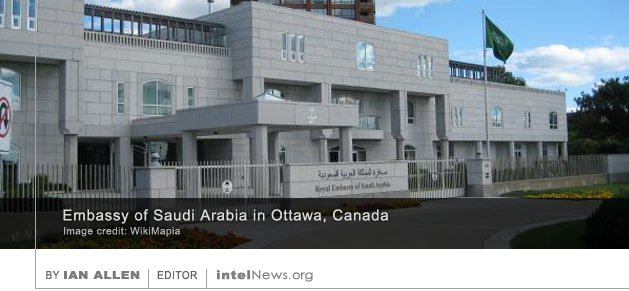
Embassy of Saudi Arabia in Canada


The government of Saudi Arabia is spying on expatriate dissidents in Canada using commercially available software designed by an Israeli company, according to researchers at the University of Toronto. This is alleged in a new report published on Monday by the Citizen Lab, a research unit of the University of Toronto’s Munk School of Global Affairs and Public Policy, which focuses on information technology, international security and human rights. The report’s authors say they have “high confidence” that intrusive surveillance software is being deployed to target the electronic communications of Saudi dissidents, including Omar Abdulaziz, a Saudi activist who has been living in Canada’s Quebec province for nearly 10 years.

Abdulaziz, 27, arrived in Canada on a student visa in 2009. In 2014, having publicly voiced criticisms of the Saudi royal family and Saudi Arabia’s repressive political system, and having been threatened by Saudi authorities, Abdulaziz successfully applied for political asylum in Canada. In 2017 he was granted permanent residency status. For the past eight years, Abdulaziz has become increasingly vocal in his criticism of the Saudi government, mostly through his satirical channel on YouTube. The channel, called Yakathah, has over 120,000 subscribers and its content has angered Saudi authorities. The latter have warned Abdulaziz’s parents and last summer arrested two of his brothers, in what he describes as attempts to silence him.

Researchers from Citizen Lab claim that the Saudi government has been targeting expatriate dissidents such as Abdulaziz using various techniques, such as sending them spyware-infested messages that express support for anti-government demonstrations in Saudi Arabia. The report also notes that these messages make use of Pegasus, a surveillance software system that has been previously implicated in surveillance activities against political dissidents from Gulf countries. The software was designed by NSO Group Technologies, an Israeli digital surveillance company based in Herzliya, a small coastal town located north of Tel Aviv.

The Citizen Lab report comes at a time of heightened tensions in relations between Canada and Saudi Arabia. In August, Canada’s Global Affairs Ministry issued sharp criticisms of the Saudi government’s human rights record, while Foreign Affairs Minister Chrystia Freeland said she was “gravely concerned” about the suppression of political speech in the Kingdom. She also urged the Saudi government to release a number of jailed political activists and stop censoring Saudi women activists seeking gender equality. But her comments enraged the Saudi royal family, which controls the Kingdom. Within days, the Saudi government expelled Canada’s ambassador from Riyadh and restricted its economic ties with Canada. The Kingdom also recalled several thousand Saudi students who were studying in Canadian universities on Saudi government scholarships.

Author: Ian Allen |
https://intelnews.org/2018/10/02/01-2409/

Envelopes containing deadly ricin poison intercepted at US Pentagon

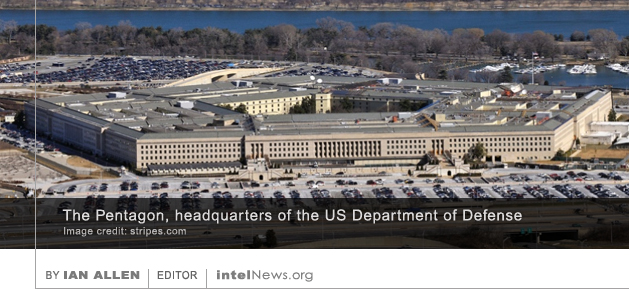
Pentagon


An investigation was opened in the United States on Tuesday, after two envelopes containing the deadly poison ricin were intercepted at the Pentagon. The envelopes were reportedly intercepted at a mail screening facility located in the vicinity of the headquarters of the US Department of Defense in Washington, DC. One of the envelopes was addressed to US Secretary of Defense James Mattis, while the other was addressed to Admiral John Richardson, who serves as Chief of Naval Operations. According to US news media, the envelopes were found to contain a powder-like substance. Upon discovery, the envelopes were secured by members of the Pentagon Force Protection Agency, the US Department of Defense’s law enforcement body that is responsible for safeguarding the Pentagon complex.

On Tuesday, the Federal Bureau of Investigation announced that the substance inside the envelopes had been examined by its technicians and had tested positive for the deadly poison ricin. Ricin is a naturally occurring toxin found inside the seeds of castor oil plants, known commonly as castor beans. Though mostly harmless in its natural state, the toxin can be processed and effectively weaponized in the form of pellets, liquid acid, mist or powder. If it finds its way into the human body, through ingestion, inhalation or injection, it can kill in fewer than 48 hours. Death usually occurs as a result of organ failure and internal bleeding, which lead to a collapse of the circulatory system. There is no known antidote for ricin poisoning.

On Tuesday afternoon, parts of the Republican Senator Ted Cruz’s campaign office in Houston, Texas, were shut down, after two staff members came in contact with what was described as a “white powdery substance” inside an envelope. The staff members were rushed to the hospital, but tests carried out later that day showed that the substance was non-toxic.

The FBI said on Tuesday that its technicians would carry out further tests on the substances found at the Pentagon and at Senator Cruz’s office, in order to confirm the initial findings. It also said that there would be no further announcements until the tests are completed. Meanwhile, the Pentagon’s mail screening facility remains under quarantine.

Author: Ian Allen


Thursday, August 30, 2018

Russia is looking for nuclear missile that went missing, US sources claim

Russian nuclear-powered missile


Russia is preparing to carry out an extensive search for a nuclear-powered missile that went missing during a test several months ago, according to American intelligence sources. The missing missile appears to be part of a new Russian-made weapon system that President Vladimir Putin boasted about earlier this year. During his annual state-of-the-union speech in Moscow on March 1, Putin said that Russia had developed a new type of nuclear-powered missile with a virtually unlimited range. This new type of weapon, said the Russian president, could fly indefinitely and thus deliver nuclear warheads to any target around the world. Additionally, the new system was designed in such a way that it could evade every known missile defense system and was thus “invulnerable to interception”, he claimed.
According to observers, the recently announced Russian weapon has been in development for more than 15 years. It is based on gasoline-powered engines that are used during the missile’s takeoff. But soon afterwards, they give way to a nuclear-powered engine that guides the missile to its eventual destination. However, despite Putin’s claims, the weapon has never been successfully tested according to American intelligence sources. The Americans claim that the Russian military tested these missiles at least four times between November of 2017 and February of this year, and that all four missiles crashed long before they reached their intended destination. The idea of indefinite flight, therefore, which Putin boasted about earlier this year, remains unrealized, according to American sources. Moscow, however, denies that the missiles crashed during the testing stage.
Now the American news network CNBC has said that Russia is preparing to launch a large-scale search operation for one of the nuclear-powered missiles that went missing in the Arctic Ocean in November of 2017. It is believed that the missile crashed in the Barents Sea, a vast expanse of water located off the northern coasts of Russia and Norway. Citing anonymous individuals “with direct knowledge of a US intelligence report” on the subject, CNBC said on Tuesday that the Russian search mission will consist of three vessels, at least one of which will be specially equipped to handle radioactive material from the missing missile’s nuclear core. The American news network said that the Russian search mission has no definite timeline. The Russian government has not commented on CNBC’s allegations.

CIA informants inside Russia are going silent, say US sources

Kremlin, Russia


Secret informants inside the Russian government, which the United States has relied on in recent years for tips about Moscow’s strategy and tactics, have gone silent in recent months, according to sources. Over many years, US intelligence agencies have built networks of Russian informants. These consist of officials placed in senior positions inside the Kremlin and other Russian government institutions, who can help shed light on Russia’s political maneuvers. These informants were crucial in enabling the US Intelligence Community to issue warnings of possible Russian meddling in the American presidential elections of November 2016. Since then, US spy agencies have largely relied on these informants to produce detailed assessments of Russian intelligence activities targeting the US, and propose measures against those involved.
But on Friday, The New York Times said in an article that these vital sources of information in Moscow have been going silent in recent months. Citing “current and former officials”, the paper said that US officials did not believe that the informants have been captured or killed. Instead, they have voluntarily “gone underground” because of “more aggressive counterintelligence” practiced by Russian security agencies. Moscow has stepped up attempts to detect spies operating inside Russia since the Sergei Skripal incident, when relations between it and most Western countries sank to their lowest point since the Cold War. In turn, Western informants operating in Russia have “decided it is too dangerous to pass information” and have gone “silent for their own protection”, said The Times.
This situation, however, has left the Central Intelligence Agency and other US spy agencies “in the dark” about the intentions of Russian President Vladimir Putin, just as America is nearing its mid-term elections. The lack of information has been exacerbated by the expulsion of dozens of American diplomats from Russia in March of this year. Moscow announced the expulsions in response to Washington’s decision to expel 60 Russian diplomats in protest against the attempt —allegedly by Russia— to kill Sergei Skripal in England. Many of the diplomats who were expelled from Russia were in fact intelligence officers operating under diplomatic cover. Few of those are now left on Russian soil and, according to The Times, “are under incredible surveillance” by Russian counterintelligence agencies. Washington is still collecting information from Russia through other channels, including communication intercepts, which, according to The Times, “remain strong”. But the paper cited anonymous American officials who “acknowledged the degradation in the [overall flow of] information collected from Russia.

Russia, US, deny conducting mystery airstrikes in Tajikistan

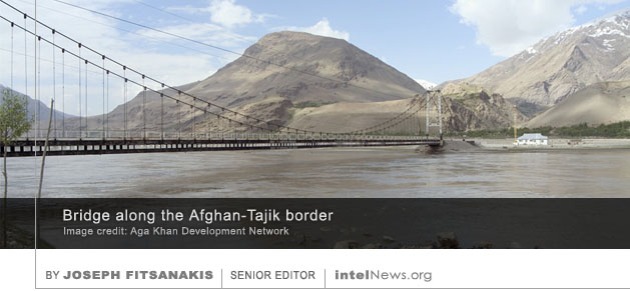
Afghanistan Tajikistan


Russia, the United States and Tajikistan have all denied that they were behind a series of mystery airstrikes that took place along the Tajik-Afghan border on Sunday, while the identity of the targets also remains unknown. The 800-mile border between Afghanistan and Tajikistan consists of mountainous terrain. Unlike the Afghan-Pakistani border, which is rife with skirmishes and firefights, the Afghan-Tajik border is usually peaceful and sparsely guarded. But on Sunday, August 26, local officials from both sides of the Afghan-Tajik border reported that fighter jets conducted a series of airstrikes. News media in Tajikistan’s capital Dushanbe said that Tajik border guards exchanged fire with Taliban fighters, killing as many as eight, but losing two officers in the process. However, on Monday a Tajik border police official denied media reports and said that the border incident involved Tajik lumberjacks who were attacked by unknown assailants from Afghanistan.
Adding to the mystery, Afghan officials said on Sunday that fighter jets bombed Afghan territory adjacent to the Tajik border. They added that they did not know if the fighter jets were Russian or Tajik. However, Tajikistan has a nominal air force consisting of no more than four Czech-made light-attack aircraft, which have not been used in over a decade. That leaves Russia, which maintains an air base in the suburbs of Dushanbe, 100 miles from the Afghan border. But on Monday, Moscow denied any involvement in the incident, as did Tajikistan. Russian officials placed the blame on the US, saying that the American-led North Atlantic Treaty Organization (NATO) force in Afghanistan is known to regularly launch airstrikes throughout Afghanistan. But US Pentagon officials said that they were not involved. When asked by reporters in Kabul, Afghan government representatives said that Afghanistan lacked the ability to monitor its airspace due to a lack of radar equipment. They called on the US-led NATO force to investigate Sunday’s incident.
Meanwhile, the identity of the persons targeted in the alleged airstrikes is also in doubt. On Monday, the Taliban denied that they had engaged with either Afghan or Tajik government forces along Afghanistan’s northern borderlands, saying that they had not authorized their fighters to operate in the area. Additionally, the Taliban have not been known to engage Tajik government troops in the past. Some observers have opined that the border skirmish may have been caused by drug smugglers who regularly transport drugs from Afghanistan to Russia or the Caspian Sea region through Tajikistan and Uzbekistan. However, there are no prior reported incidents of Russian, American or Tajik fighter jets having been deployed along the Afghan-Tajik border to combat drug traffickers.

US delegation met secretly with Syrian intelligence chiefs, newspaper claims

Ali Mamlouk


A delegation of senior American government officials met secretly with Syria’s spy chiefs in an effort to lay out the terms of a possible deal between Washington and Damascus, according to a Lebanese newspaper. Relations between the United States and Syria have been strained since the late 1950s, when Damascus blamed Washington for a failed coup and expelled America’s ambassador there. In 2012, the US shut down its embassy in the Syrian capital in response to the government’s violent suppression of protests. Since then, Washington has carried out missile strikes on Syrian soil at least twice, while openly supporting armed groups that are opposed to the government of President Bashar al-Assad.
But according to the Lebanese newspaper Al-Akhbar, a group of senior American officials held a secret meeting in Damascus with Syrian spy chiefs. If true, the move could signify a major shift in US-Syrian relations. The paper, which supports the pro-Assad Shiite paramilitary group Hezbollah, and is close to the Syrian government, published news of the alleged meeting on Tuesday. It said that the meeting took place in complete secrecy during the last week of June and that it was facilitated by intermediaries from Russia and the United Arab Emirates. The latter used a UAE government airplane to fly the US delegation —whose names Al-Akhbar did not reveal— to the Syrian capital. The visiting delegation, which according to the paper “included [senior] officers from many US intelligence and security agencies”, was transported to a secret Syrian government facility in the dead of night by “a huge procession of black SUVs”, said the paper. The Syrian delegation at the meeting was reportedly headed by Ali Mamlouk, special security adviser to President al-Assad and head of the National Security Bureau of the governing Ba’ath Party. Other participants from the Syrian side included Mohammed Dib Zeitoun, director of the General Security Directorate, and Muwaffaq Asaad, the deputy chief of staff of the Syrian Armed Forces, said Al-Akhbar.
During the meeting, the two sides allegedly attempted to lay out the foundations of a possible post-civil war deal between Washington and Damascus. According to the Lebanese paper, the US delegation offered to withdraw American Special Forces from Kurdish-controlled northern Syria. In return, they allegedly asked for the removal of Iranian troops from Syrian regions that are adjacent to the Israeli border. The two sides also discussed the resumption of intelligence sharing on matters relating to Sunni radicals operating in Syria. No decisions were taken during the meeting, said Al-Akhbar, but the two sides decided to continue to share proposals and ideas about a possible bilateral agreement.
The French news agency Agence France Presse said on Tuesday that it could not independently confirm Al-Akhbar’s claims, as its attempts to contact the US departments of State and Defense were not fruitful. It noted, however, that both Mamlk and Zeitoun feature on the US government’s list of sanctions against Syrian government officials that are believed to have directly participated in human-rights abuses against political opponents since the outbreak of the civil war in 2011.