Monday, January 15, 2018

Egyptian branch of ISIS declares war on Hamas as tensions rise in Sinai

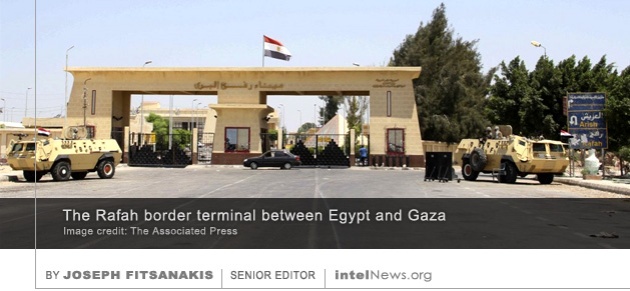
Egypt Gaza border


The Islamic State in Egypt’s Sinai Province has declared war on the Palestinian militant group Hamas, in a move that experts say will furhter-complicate an already volatile security situation in eastern Egypt. Many observers see the group, Wilayat Sinai, as the strongest international arm of the Islamic State of Iraq and Syria (ISIS). Known officially as ISIS – Sinai Province, Wilayat Sinai was behind the 2015 downing of Metrojet Flight 9268, which killed all 224 passengers and crew onboard, most of them Russians. The same group killed 311 people at a Sufi mosque in November of last year, in what has become known as the worst terrorist attack in Egypt’s modern history.
Israeli sources claim that, in the past, Wilayat Sinai has had limited cooperation with Hamas, the militant group that controls the Gaza Strip, a coastal section of the Palestinian territories that borders with Egypt’s Sinai Province. The two organizations are believed to have engaged in limited cross-border arms-smuggling, while some injured Wilayat Sinai fighters have been treated in Gaza Strip hospitals. But the two groups have major ideological differences that contribute to their increasingly tense relationship. The Islamic State objects to participation in democratic elections, which it sees as efforts to place human will above divine law. It has thus condemned Hamas’ decision to participate in the 2006 elections in the Palestinian territories. Additionally, even though it promotes Sunni Islam, Hamas is far less strict in its religious approach than the Islamic State, and does not impose Sharia (Islamic law based on the Quran) in the territory it controls. Furthermore, Hamas suppresses Saudi-inspired Wahhabism and its security forces often arrest ISIS and al-Qaeda sympathizers in the Gaza Strip. In the past month, ISIS accused Hamas of having failed to prevent America’s formal recognition of Jerusalem as the capital of Israel. Additionally, ISIS is opposed to the support that Hamas receives from Iran, a Shiite nation that ISIS regards as heretical.
There are reports that Hamas has been quietly collaborating with Egypt and even Israel in recent months, in order to combat the rise of ISIS in the region. For several months now, the Palestinian group has exercised stricter control over its seven-mile-long border with Egypt. It has rebuilt border barriers that had previously been destroyed and has installed security fences and a digital surveillance system. It has also launched a public-relations effort to shame the families of young men from Gaza who have joined ISIS forces in Sinai. In response to these moves, Wilayat Sinai has publicly urged its supporters to kill members of Hamas and attack the group’s security installations and public buildings. The ISIS-affiliated group has also urged its members to eliminate members of the small Shiite Muslim community in the Gaza strip. According to experts, the decision by Wilayat Sinai to declare war on Hamas means that the group has now virtually surrounded itself with adversaries. The move may also increase informal collaboration between Hamas and the Israeli government, say observers.

The missing papers at the National Archives may not be a grand conspiracy after all

Thousands of government papers have apparently gone missing from the UK National Archives. Declassified documents covering some of the most controversial episodes from Britain’s past, including the Falklands War, Northern Ireland’s Troubles and the now infamous Zinoviev Letter Affair were among the missing files, having been officially “misplaced while on loan” to government departments. Some have claimed this is evidence of a government cover-up, but the truth is probably more mundane.
Others papers returned to government from the archives based at Kew, Surrey, include papers on Britain’s control over the Mandate of Palestine, sensitive records on defence agreements between the UK and Malaya and documents on the 1978 killing of dissident Georgi Markov by Bulgarian spies in central London. The number of missing files ran to “almost 1,000”, according to The Guardian.
The story prompted criticism over government handling of documents released into the public domain and led to questions of a possible cover-up by departments trying to manipulate the past. Labour’s shadow cabinet office minister Jon Trickett called for an investigation and said the British public deserved to know “what the government has done in their name”. The Scottish National Party also demanded an inquiry.

Amnesty International and Reprieve also expressed concerns about the possible loss of papers dealing with human rights violations, especially by the British state in Northern Ireland. Patrick Corrigan, Amnesty’s Northern Ireland programme director demanded “a government-wide search”.

History theft

Journalist Siobhan Fenton linked the controversy to attempts to rewrite Britain’s colonial legacy, adding: “Britain has long failed to acknowledge the horrors that its colonialism and imperialism have wrought on the world.”
And The National’s Martin Hannan even claimed that the Zinoviev Letter (a forgery at the heart of a plot to destabilise Britain’s first Labour government in 1924) was “among the missing documents” – even though copies of the letter can be easily found at Kew.
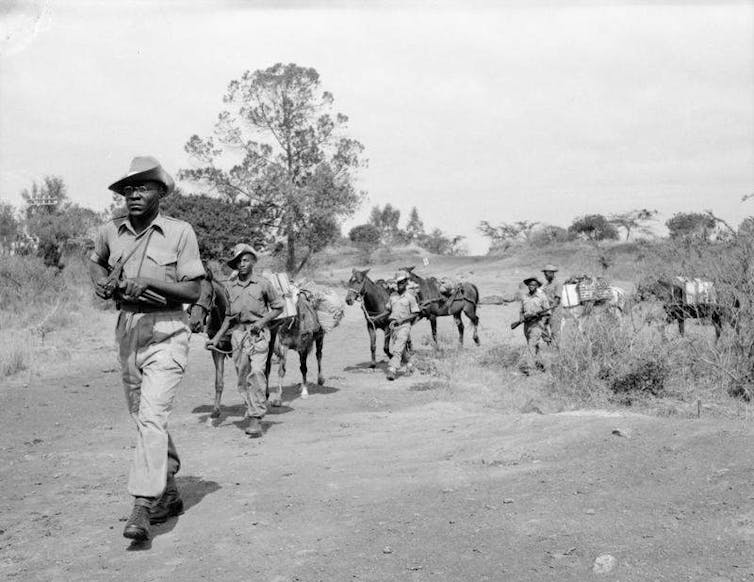
In fairness, this isn’t the first time that government has been accused of withholding sensitive papers. The Foreign & Commonwealth Office (FCO) was found to be hoarding colonial era records in the so-called “migrated archives” following legal action by Mau Mau veterans tortured by the British authorities in the 1950s. The FCO subsequently releasedthis material to the National Archives.
But are the new claims of “almost 1,000” missing files actually accurate? In short, no. Figures from the National Archives suggest the number is far smaller than that put forward by The Guardian’s Ian Cobain. Government departments can request the return of documents sent to Kew for several reasons, including writing official history and exploring departmental precedents.
Both the Public Records Act 1958 and Section 46 “Code of Practice –- records management” under Freedom of Information, asks departments to ensure the “safe-keeping and security of records in their custody”. Departments are encouraged to return files as soon as they have been used. Figures obtained under Freedom of Information show that government departments asked for just over 23,000 files between 2011 and 2014. As of early 2014, 2,925 were yet to be returned.

So how many have been lost?

The National Archives catalogue shows just 626 records – far fewer than the thousands initially suggested. These contain documents from across government, including the FCO, Home Office, Ministry of Defence, Board of Trade, Treasury, Office of Works and many more (some 63 public bodies).
Another Freedom of Information request reveals that 48 records were lost while on loan from July 2011 to July 2016. The Ministry of Defence (19) and Metropolitan Police (ten) were the worst offenders. The FCO accounted for just three. It is unclear when the other almost 600 files went missing, but these could have been lost over a longer period of time, the figures suggest.
To place this into some context, a total of 372 records went missing for unspecified reasons in the vaults of the National Archives between the summer of 2011 and 2016. Figures obtained by the BBC show this number could be as high as 402, including files on nuclear collaboration with Israel and correspondence with Winston Churchill. That’s out of nearly 11m records – 0.01% of the collection.
Searches of the online catalogue show that one Home Office file on the Zinoviev Letter, three on Britain’s relationship with Malaya and several highlighted by The Guardian have been lost. Claims that “many” of the missing papers refer to the Falklands are inaccurate. Just one Treasury file on the development of the Falklands is missing. None refer to Britain’s controversial response to the Mau Mau uprising or the colonial campaigns in Malaya, Cyprus or Aden.
On watch for Mau Mau fighters.
Given Amnesty’s concern over the loss of papers on Northern Ireland, only one file – a Ministry of Defence assessment in the early 1970s – has been lost. Many of the missing reports on Communist Party infiltration in the 1950s can be found in MI5’s declassified papers or those of the Cabinet Office, already available to researchers elsewhere.
For all the talk of government lies, many of the files relate to more mundane matters. Among the lost papers are records on the Channel Tunnel, Norwich Airport, a map of Princes Risborough, kneepads in coalmines (of interest no doubt to researchers in these areas, but far from the government cover-up suggested by some).
For a historian, the loss of government records is troubling but the claim that government is manipulating history by losing documents is an exaggeration. Historians already have the ability to write on controversial aspects from Britain’s past – Zinoviev, Mau Mau, Cold War surveillance and others – using papers at the National Archives, as seen by the growth of historical research on these subjects and many more. If government is supposedly trying to alter history by “losing” historical papers, it’s not doing a very good job.

AMERICAN ISIS FIGHTER’S BROTHER SENTENCED FOR TERRORISM-RELATED CHARGES

ISIS fighter Douglas McCain was the first-known American to die fighting for the Islamic state. Now, attention is being shifted to his brother who was sentenced Friday to 10 years in prison for possession of firearms and lying to the federal agents about international terrorism.
Marchello McCain, 35, was living in San Diego with a group of friends that he met as a child, some of whom went on to become radicalized, The San Diego Union-Tribune reports. His brother was also living in San Diego, but left in 2014 to fight in Syria.
Prosecutors accused Marchello McCain of being part of a conspiracy to support international terrorism and that ultimately he intended to go join his brother overseas. He went on to admit that he lied to the FBI about his brother’s reason for travel and where the money came from that funded them.  
“Counterterrorism investigations are the highest priority investigations conducted by FBI Joint Terrorism Task Forces,” FBI Special Agent in Charge Eric S. Birnbaum, said in a statement released by the Department of Justice. “When someone misleads or obstructs counterterrorism investigations, this can adversely affect investigative activity in these important cases. Today's sentence will hold Mr. McCain accountable for his actions and dissuade others from lying to law enforcement agents concerning international terrorism matters.”
Marchello McCain also told the agents that he owned at least nine firearms, some of which were stolen. Furthermore, he confessed that a few weeks before his brother departed for Syria in early 2014, they went to a shooting range in San Diego to practice handling various firearms, including an AR-15 style semi-automatic rifle and a 12-gauge pump-action shotgun. His brother ended up dying in the war-torn country just six months afterward.
“ISIS has brought the war on terror closer to home by directing and inspiring attacks in the U.S. and other countries, thereby putting Americans lives in danger,” U.S. Attorney Adam Braverman, said in a statement. “By lying to federal agents, Marchello McCain delayed, frustrated and thwarted an investigation into a group that supplied U.S. and Canadian fighters to ISIS. We are committed to doing whatever it takes to protect American lives here and abroad.”
Prosecutors argued for a harsher sentence for McCain, but settled on 10 years.

Friday, January 5, 2018

Tony Blair denies he warned Donald Trump British spies were after him

Tony Blair

A spokesman for Tony Blair has dismissed as “categorically absurd” allegations that the former British Prime Minister warned the White House that President Donald Trump was targeted by British spy agencies. The claims are made in the book Fire and Fury: Inside the Trump White House, which is due to be published next week. Its author, Michael Wolf, says he based the information in the book on more than 200 interviews that he held with President Trump and members of his inner circle during the past year.
Wolf alleges that Blair, who was Britain’s prime minister from 1997 to 2007, visited the White House in secret in February of 2017. He allegedly did so as a private citizen, as he has held no public position since 2015, when he stepped down from his post as a Middle East envoy for the United Nations. While at the White House, Blair reportedly met with Jared Kushner, Trump’s son-in-law and senior aide. During that meeting, says Wolf, Blair told Kushner that Trump could have been under surveillance by British intelligence during his presidential election campaign. The former British prime minister allegedly said that any surveillance on Trump would have been carried out by the Government Communications Headquarters (GCHQ), Britain’s signals intelligence agency. Wolf further alleges that the administration of US President Barack Obama never asked London to spy on Trump. Instead, the White House “hinted” that intelligence collection about Trump would be “helpful”, says Wolf. The reason why Blair volunteered this information to Kushner, claims Wolf, was that he was hoping to gain the US president’s trust and be appointed as Washington’s envoy to the Middle East.
Blair’s revelation, which Wolf describes in his book as a “juicy nugget or information”, allegedly “churned and festered” in Trump’s mind. It was the basis for claims made on March 14, 2017, by a Fox News commentator that the GCHQ had spied on Trump on behalf of the White House. The claim was repeated on March 17 at the White House by Sean Spicer, Trump’s then-press secretary, who said that Obama had used the GCHQ to spy on Trump so as to evade American privacy laws. Spicer’s claim prompted an angry response from the British government in London and from the British spy agency itself. In a rare public comment, GCHQ called the allegations “utterly ridiculous”.
Late on Wednesday, a spokeswoman for the office of Tony Blair said in an email that Wolf’s claims in Fire and Fury were “a complete fabrication […], have no basis in reality and are simply untrue”. Last year, another spokesman for Blair dismissed claims that the former British prime minister had lobbied to be appointed Trump’s Middle East envoy. This claim was so “completely overblown” and “so far beyond speculation there isn’t a word for it”, said the spokesman. President Trump has not commented on Wolf’s claim about Blair’s alleged visit and subsequent meeting with Kushner.

South Korean ex-president took millions in bribes from spy agency, say prosecutors

 Park Geun-hye

South Korea’s disgraced former president, Park Geun-hye, has been charged with accepting bribes amounting to millions of dollars from the country’s spy agency, according to reports. Park made history in 2013, by becoming the first woman president in South Korean history. However, almost as soon as she assumed office, her administration became embroiled in successive corruption scandals. By 2016, Park’s presidency had been brought to a standstill due to mass protests urging her removal from power, while increasing numbers of officials and administrators were refusing to work with her. She was eventually impeached in 2017, after the Constitutional Court of Korea found that she had violated the country’s laws by promoting the interests of personal friends and private corporations in return for cash and favours. She is currently in custody awaiting trial for 18 different charges, including abuse of power, coercion, blackmail and bribery.

On Thursday, government prosecutors charged Park with accepting between $50,000 and $190,000 in monthly bribes from the National Intelligence Service (NIS). The monthly sums were allegedly delivered to Park almost as soon as she assumed the nation’s presidency, in 2013, and continued until the summer of 2016. Prosecutors allege that the monthly bribes total in excess of $3 million. Prosecutors allege that the cash was delivered to Park’s aides in deserted parking lots and side streets located near the Blue House, South Korea’s presidential palace. The cash allegedly came from what the prosecutors described as “special operational funds” and was meant for highly secret undercover operations. It was therefore not subject to parliamentary oversight or annual audits, according to court documents. The secret funds were allegedly used by Mrs. Park and her aides for bribes in exchange for political favors, according to the indictment.
In November, prosecutors charged three former directors of the NIS with secretly diverting funds from the agency’s clandestine budget to Park. The three men, Nam Jae-joon, Lee Byung-kee and Lee Byung-ho, headed the NIS between 2013 and 2016, when Mrs. Park was head of state. The new charges will add two more counts, one of embezzlement of funds and one of bribery, to Park’s long list of accusations. The disgraced former president is expected to remain in custody until March 3.

Did Russia Really Lose Seven Warplanes in Syria on New Year’s Eve?

Did Russia Really Lose Seven Warplanes in Syria on New Year’s Eve?

On Jan. 3, 2018, the Russian newspaper Kommersant reported that “radical Islamists” had destroyed seven Russian combat jets at Khmeimim, or Hmeimim, air base near Latakia, Syria on New Year’s Eve, 2017.
Russian president Vladimir Putin had visited the base earlier that month to praise the troops for their “victory over the most combat capable Islamic militants” and announced a partial withdrawal of Russian forces stationed there.
According to Kommersant, two “military-diplomatic sources” said the destroyed aircraft included four Su-24 swing-wing bombers, two Su-35S multi-role fighters and one An-72 transport jet.
Additionally, the sources claimed the attack wounded at least 10 Russian military personnel and destroyed an ammunition dump. If true, this would mark by far the largest loss yet of Russian hardware in Syria.
The An-72, identifiable by two the turbofan engines fitted atop the wings, is a transport capable taking off from runways as short as 500 meters long. The Su-35S is Russia’s most advanced in-service fighter. The Su-24 is a supersonic bomber that has been a workhorse of Russia’s bombing campaign targeting Syrian rebels and civilian facilities in rebel-held areas.
In 2015, a Turkish F-16 shot down a Russian Su-24. The bomber was, until New Year’s Eve two years later, the only Russian jet destroyed by hostile fire in Syria. Moscow has lost at least three more warplanes in accidents and eight or more helicopters have either crashed or been shot down.
On Jan. 4, 2o17, the Russian defense ministry issued a statement admitting that a mortar attack had killed two servicemen but denying any aircraft losses, claiming its forces there remained “combat ready.” It also noted that a Russian Mi-24 attack helicopter suffered a non-combat accident near Hama airbase on the day of the bombardment that killed both crew.
The Kremlin has not always been forthcoming or honest about losses on the ground in Syria. However, no photographic evidence has emerged confirming destroyed Russian aircraft. Strangely, it’s not even evident that any rebel groups have taken credit for, or posted evidence of, an attack that supposedly inflicted significant damage.
The same day that Moscow published its statement, Russian military journalist Roman Saponkov posted photos on VKontakte, the most popular Russian social media platform, showing the damaged horizontal stabilizers of an Su-24 and a leaking jet intake.
According to Saponkov, no aircraft were destroyed but 10 aircraft were damaged, including six Su-24s, one Su-35S, one An-72, one An-30 turboprop observation plane and an Mi-8 transport helicopter. He also claimed that two Su-24s and one Su-35S have returned to operational status.
In a subsequent post, Saponkov said he had been asked not to report the attack. “Yesterday, I turned out to be the first to give this information, although ‘everyone in the know’ already knew about it. I even wrote Syrians and expressed condolences. Five different sources asked me ‘not to tell anyone.’ Of course, the Russians, whose citizens were killed in the shelling, are not Syrians and they do not need to know … ”
“It is not worthwhile to blame our military,” Saponkov added. “The militants were qualitatively prepared, most likely they had foreign technologies. Our people simply did not expect that the militants would acquire new technology.”
In a follow-up post, Saponkov said that his credibility has been attacked by “pro-Kremlin” bloggers.
Suggestively, satellite photos of Hmeimim airbase show the Russian warplanes parked closely together. An accurate mortar bombardment could damage multiple aircraft with each shell, and potentially trigger secondary damage from flying aircraft parts.
Mortars are much smaller and more portable than artillery is and can be fired more rapidly. However, an 82-millimter mortar—a type in use with both sides in the Syrian civil war—has a range of only 2.6 miles, implying that a rebel team would have had to infiltrate quite close to the heavily defended Russian air base to strike effectively.
A larger 120-millimeter mortar can reach out to 4.4 miles, but would likely require vehicular transport. Getting so close to Latakia poses quite a challenge for the rebels, as their territory in Idlib province shrank considerably in 2017.
Saponkov reference to “foreign technology” could be telling. In recent years, Syrian rebels have used foreign-made anti-tank missiles to destroy Syrian government aircraft.

Thursday, January 4, 2018

Iranian army commander offers to help police with protests

Iran's army chief said on Thursday police forces had already quelled anti-government unrest that has killed 21 people but that his troops were ready to intervene if needed, official media reported, as new state-sponsored pro-government rallies were held.

The anti-government demonstrations, which seem to be spontaneous and without a clear leader, erupted a week ago in Iran's second city of Mashhad over economic hardships - mostly youth unemployment and alleged corruption.

"Although this blind sedition was so small that a portion of the police force was able to nip it in the bud ... you can rest assured that your comrades in the Islamic Republic's army would be ready to confront the dupes of the Great Satan (United States)," Major General Abdolrahim Mousavi was quoted as saying.

As the unrest spread across the country, protesters saying they were tired of anti-Western slogans and that it was time for both the clerical leadership and the government of President Hassan Rouhani to step down.

The demonstrators include members of the working class as well as educated Iranians from the middle class, which formed the backbone of pro-reform protests in 2009.

Following six days of demonstrations, the elite Revolutionary Guards Corps said on Wednesday that it had deployed forces to quell unrest in three provinces where most of the trouble had occurred.

That was the clearest sign yet that authorities were taking the protests seriously.

The Revolutionary Guards, the sword and shield of Iran's Shi'ite theocracy, were instrumental in suppressing an uprising over alleged election fraud in 2009 in which dozens were killed.

BOLD SLOGANS

Few see these demonstrations as an existential threat to the clerical establishment that has dominated Iran since the 1979 Islamic revolution.

But protesters have become increasingly bold, calling for the downfall of Supreme Leader Ayatollah Ali Khamenei, who has blamed the biggest challenge to his rule in nearly a decade on foreign agents.

"I don't want to harm my country but when I see those who run this country are so corrupt, I feel like I am being suffocated. They just talk. They accuse 'the enemies' of everything," said protester Reza, 43, a father of three in the city of Isfahan.

"I am not an enemy. I am an Iranian. I love my country. Stop stealing my money, my children's money," he told Reuters by telephone

Iranian Nobel Peace laureate Shirin Ebadi urged people to engage in civil disobedience and press on with their grievances.

The Saudi-owned pan-Arab daily Asharq Al-Awsat quoted Iran's most famous human rights lawyer as saying Iranians should stay on the street and that the constitution gave them the right to hold demonstrations.

Authorities have responded to the nationwide anger by staging pro-government rallies in several cities.

On Thursday, state television showed thousands of marchers in Mashhad carrying posters of Khamenei and banners that read "Death to seditionists".

Ebadi, who lives in London, was awarded the Nobel Peace Prize in 2003 and is one of a number of exiled critics of Iran's leadership. She called on Iranians to stop paying water, gas and electricity bills and taxes.

She also urged them to withdraw their money from state banks to exert economic pressure on the government to force it to stop resorting to violence and to meet their demands.

"If the government has not listened to you for 38 years, your role has come to ignore what the government says to you now," the London-based Asharq Al-Awsat quoted Ebadi as saying in an interview.

The unrest has drawn sharply varied responses internationally, with Europeans expressing unease at the delighted reaction of U.S. and Israeli leaders to the display of opposition to Iran's clerical establishment.
http://news.trust.org/item/20180104074113-oiizt