
Wednesday, November 4, 2015
Australian intelligence says spike in 'terrorism' funding investigations
Australia's anti-money laundering agency says reports of suspected "terrorism-financing" tripled in the past year, with over A$50 million ($35.92 million) which could be used to support Islamist militants being investigated.
The financial intelligence agency, AUSTRAC, said in its annual report released this week that it had recorded a trebling of "suspicious matter reports" that could be linked to funding of militant groups. It recorded up to 367 reported cases in 2014-15 from 118 a year earlier.
"The volume of terrorism financing in Australia is linked to the number of Australians travelling to join terrorist groups in Syria and Iraq," the report said.
Roughly A$53 million dollars, A$11 million in cash, was reported as suspicious to the agency. The funds may have been intended to cover a variety of activities, including paying family members who died in operations, AUSTRAC said.
Australia is on high alert for attacks by radicalised Muslims or by home-grown militants returning from fighting in the Middle East, having raised its threat level to "high" and unleashed a series of high-profile raids in major cities.
Security analysts have put the number of foreign fighters in Iraq and Syria, travelling from scores of countries around the world, in the thousands. AUSTRAC said in the report that it was monitoring around 100 people.
About 120 Australians are believed to be fighting with Islamic State and other militant groups in Iraq and Syria, with several believed by intelligence agencies to hold leadership positions in Islamic State.
Australian citizens now face up to a decade in prison for travel to overseas areas declared off-limits and the government has worked to halt the flow of funds overseas.
Canberra last year shut a money transfer business linked to the family of suspected Australian Islamic State fighter Khaled Sharrouf on suspicions it transferred up to A$20 million to foreign militants. Sharrouf was killed in Iraq earlier this year. ($1 = 1.3920 Australian dollars)
http://www.trust.org/item/20151104011506-eygem/

Russian military plans mobile nuclear energy plants in Arctic by 2020

A crew member looks out from aboard the atomic icebreaker Yamal docked in the Arctic port of Murmansk
Russia’s Defense Ministry has contracted research work to
develop mobile nuclear power plants designated for military
installations in the Arctic. With the Soviet experience in mind,
introduction of the first mobile NPP is likely to take place by 2020.
“The project has already begun and is going through a research stage now,” TASS cited Yury Konyushko, CEO of Innovation Projects Engineering Company (IPEC), which has been chosen to work on the project.
Preliminary data is to be presented to the military by the end of this year, Konyushko said.
Once the ministry checks out the project and gives it the green light, full-scale development, estimated to take up to two years, will begin. After that engineering and construction of an operable prototype will be launched.
“We are to present the pilot unit within four to five years, which is by 2020,” Konyushko said, specifically saying that an assembly line for serial production of such units is going to be readied simultaneously from scratch.
The technical characteristics of the mobile NPPs demanded by the Defense Ministry have not been disclosed. The units are expected to be produced on a modular principle and mounted on KAMAZ and MAZ trucks, as well as sledge-mounted for harsh Arctic conditions.
A principal condition for the future mobile nuclear power stations is that they could be transported by military cargo jets and heavy cargo helicopters, such as the Mil Mi-26.
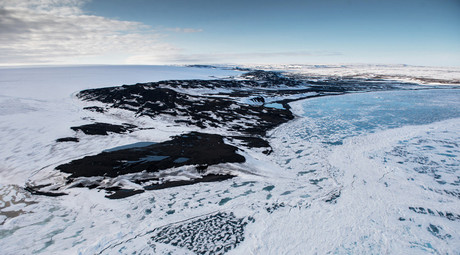
“There is a demand for no less than 30 such [nuclear power plant] units for Extreme North and reclaiming Arctic archipelagos,” Konyushko said.
The future mobile NPPs are going to be fully autonomous and designed for years-long operation with a small number of personnel. At the same time, all data from the unit’s controls and sensors will be constantly sent to control rooms on the mainland using satellite connections for constant monitoring.
The first tracked mobile nuclear power plant was designed in the USSR in 1961. It was followed by a number of projects, all of which were discontinued following the Chernobyl nuclear catastrophe in 1986.
Today, Russia is finalizing another transportable nuclear power project, the first floating nuclear power plant built for use in the Arctic, which will be ready by October 2016.
https://www.rt.com/news/320732-arctic-mobile-nuclear-powerplants/
Crashed Russian plane may have been brought down by explosive device

LONDON (Reuters) - Britain said on Wednesday that the Russian plane that crashed in Egypt after taking off from Red Sea resort of Sharm al-Sheikh might have been brought down by an explosive device.
"While the investigation is still ongoing we cannot say categorically why the Russian jet crashed," Prime Minister David Cameron's office said in a statement.
"But as more information has come to light we have become concerned that the plane may well have been brought down by an explosive device."
As a precautionary measure, it said, the government had decided that flights due to leave the resort for Britain on Wednesday evening would be delayed to allow time for a team of UK aviation experts, currently on their way, to make an assessment of the security arrangements in place at the airport.
That assessment was expected to be completed later and there were no more flights due to take off from Britain to Sharm al-Sheikh on Wednesday.
"We would underline that this is a precautionary step and we are working closely with the airlines on this approach," the statement said.
Extra consular staff were being sent to the resort to help British holidaymakers there, it said, while those either there or planning to travel were advised to contact their airline or tour operator.
Britain was not changing the level of its travel advice to the area, it added.
The Russian-operated Airbus A321M crashed on Saturday shortly after taking off from the resort on its way to St Petersburg, killing all 224 people on board.
http://uk.businessinsider.com/crashed-russian-plane-may-have-been-brought-down-by-explosive-device-2015-11
Monday, November 2, 2015
Nuclear black market thriving in Eastern Europe despite efforts to stop it
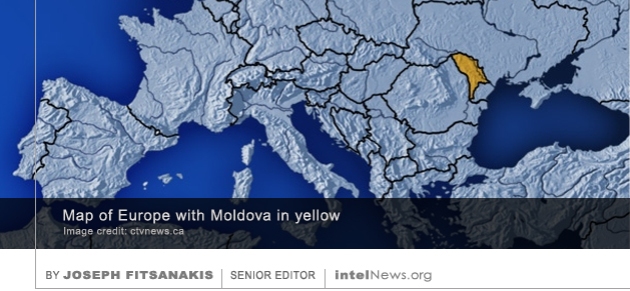
The United States Federal Bureau of Investigation is assisting authorities in some of Europe’s poorest states in their efforts to stop criminals with Russian connections from selling radioactive material to foreign terrorist organizations. The Associated Press said earlier this month that joint efforts by the FBI and Eastern European governments have frustrated at least four attempts to sell stolen radioactive material in the black market since 2010.
In one case, which involved a criminal
gang in the former Soviet Republic of Moldova, the smugglers were trying
to sell radioactive material to representatives of the Islamic State in
Iraq and Syria. The Associated Press said it spoke to law enforcement
and judicial authorities in Moldova, who have set up a small team of
detectives to investigate the nuclear black market. The Moldovans told
the Associated Press that they were working with the FBI, and even
shared some of their investigative case files with the news agency.
In another recent case, which was cracked
by authorities in February of this year, a smuggler in Moldova tried to
sell a significant quantity of cesium, a radioactive metal typically
extracted from the waste produced by nuclear reactors. According to the
Moldovans, the quantity of the fission product was “enough to
contaminate several city blocks”. Additionally, the Moldovan
investigators told the Associated Press that the smuggler was
specifically seeking a buyer from the Islamic State.
In yet another case, a joint US-Moldovan
investigation targeted Alexandr Agheenco, a mysterious Russian-born
smuggler, who in the spring of 2011 said he had access to bomb-grade
uranium. According to Moldovan investigators, a middleman working for
Agheenco told a prospective buyer from Sudan that he would be willing to
sell an unspecified quantity of uranium, as well as “blueprints for a
dirty bomb”. Although the sale was prevented by the US-Moldovan
investigators, Agheenco managed to escape.
According to the Moldovans, the worsening
relations between Washington and Moscow are making it more difficult
for investigators from the two countries to share intelligence on
nuclear smuggling rings. As a result, smugglers are finding it easier to
operate across Eastern Europe and parts of the former Soviet Union.
Many leading black-market operatives manage to avoid capture and
prosecution, while even those arrested are usually able to evade lengthy
convictions, which means that they quickly return to nuclear smuggling,
reports the Associated Press.
Terrorism threat assessment sought for liquid uranium transport across Peace Bridge

Liquid uranium is expected to be transported across the Peace Bridge next year.
Congressman Brian Higgins recently won unanimous support in Congress for a measure requiring the Department of Homeland Security to conduct a terrorism threat assessment on the transportation of chemical, biological, nuclear and radiological materials in the United States.
Higgins sponsored the measure after learning highly enriched liquid uranium is slated to cross the Peace Bridge next year while en route from Ontario to South Carolina.
Congressman Chris Collins backed Higgins on the measure, noting public safety is of the highest concern.
"Congressman Higgins and I both want assurances that every potential situation has been analyzed, has been covered, that there will be effectively no risk to Western New Yorkers," says Collins. "We're going to make sure that happens before any materials get transported through our part of the country."
Higgins has released a written statement noting the route the shipment will take next year crosses the Niagara River, accessing 95-percent of the surface fresh water in the U.S. He argues an attack, or even an accident, would have catastrophic consequences.
http://news.wbfo.org/post/terrorism-threat-assessment-sought-liquid-uranium-transport-across-peace-bridge#stream/0
Islamic State' takes central Syrian town near key highway

Russia has stepped up its airstrikes in Homs province
The Britain-based Syrian Observatory for Human Rights said Sunday that "Islamic State" (IS) forces had captured Mahin in the central Homs province and were advancing northwest toward the majority-Christian town of Sadad.
Mahin lies around 25 kilometers (15 miles) east of the highway linking Homs to Syria's capital, Damascus, and Aleppo. The town also hosts a large military complex and arms depots.
The Observatory said the assault on Mahin began with suicide car bombs at government checkpoints, clearing the way for fighters to enter the city. Government soldiers were driven out. There were intense clashes on the outskirts of town and on the road to Sadad.
IS has seized large sections of Syria but its strongholds lie mainly in the north and east of the country. The group only began to establish a presence in Homs a few months ago when it seized the ancient city of Palmyra.
The IS advance on Sunday came despite Russian airstrikes against the militants in the region. In recent weeks the group has also made considerable gains in Aleppo, taking control of villages from rebel groups, as well as a section of a highway that serves as a supply route between government-controlled parts of the northern province.

War rages on
More than 250,000 people have died in Syria's four-year civil war, while millions have been displaced by the violence. The conflict began as an uprising against the rule of President Bashar al-Assad in 2011 but has since escalated into a multisided war.
Diplomats from the US, Russia, Saudi Arabia and more than a dozen other nations met in Vienna this week for talks aimed to end the conflict and pave the way for a political solution in Syria. At the meeting, participants proposed a nationwide truce and called for the renewal of a UN-led peace process.
On Sunday, UN special envoy Staffan de Mistura was in Damascus briefing Syria's government, which had not been invited to attend the talks. Foreign Minister Walid al-Moallem said "important" points were made in Vienna but he criticized negotiators for failing to convince Syria's critics to curb their support for "terrorism."
Assad's government has often referred to armed opposition forces as "terrorists," and has blamed Saudi Arabia and Turkey for backing them. Russia's air campaign, which seeks to prop up Assad, has mainly targeted those same rebels, as well as IS militants.
http://www.dw.com/en/islamic-state-takes-central-syrian-town-near-key-highway/a-18820194
Al Qaeda chief urges militant unity against Russia in Syria

Al Qaeda leader Ayman al-Zawahri called on Muslim supporters to band together to confront the threat from the West and Russia in Syria and Iraq, the latest recording suggesting greater unity between al Qaeda and Islamic State.
"The Americans, Russians, Iranians, Alawites, and Hezbollah are coordinating their war against us - are we not capable of stopping the fighting amongst ourselves so we can direct all our efforts against them?" Zawahri said in an audio recording released on the Internet on Sunday (Nov 1).
It was not clear when the recording was made but references to Russian aggression suggest it was made after Russia, an ally of Syrian President Bashar al-Assad, launched air raids against opposition groups and Islamic State in Syria on Sep 30.
In a recording released in September, Zawahri dismissed Islamic State and its leader Abu Bakr al-Baghdadi as illegitimate but said his followers would join them in fighting the Western-led coalition in Iraq and Syria if possible.
"My mujahideen brothers in all places and of all groups ... we face aggression from America, Europe, and Russia ... so it's up to us to stand together as one from East Turkestan to Morocco," Zawahri said.
Islamic State, the ultra-hardline group that controls large parts of Iraq and Syria, has called for a holy war against both Russia and the United States in response to air strikes on its fighters in Syria.
Any cooperation between al Qaeda and Islamic State would further complicate efforts to stabilise the Middle East, where militant groups have gained influence and escalated attacks since the Arab uprisings of 2011 toppled autocrats who had contained them.
http://www.channelnewsasia.com/news/world/al-qaeda-chief-urges-mili/2232430.html
Subscribe to:
Posts (Atom)